
Who ‘owns’ the prompt? (Hint: It’s not always the adviser). Only 18% say their adviser prompted them last year. That’s a hidden growth lever.
Here’s a quietly important datapoint: when clients were asked who prompted them to take tax year end action last year, only 18% said it was their financial adviser.
That doesn’t mean clients don’t value advice – it means the prompt is often coming from somewhere else (or not coming at all). This is a strategic opportunity, because whoever owns the prompt owns the relationship moment.
The implication isn’t ‘message more’. It’s ‘prompt better’ – earlier, clearer, and with a purpose clients recognise. Our research* makes it clear that clients want contact by end of February. They want fewer hoops. They want reassurance that decisions are safe. A prompt that feels like a helpful system (not a sales nudge) is far more likely to land.
So, design your prompt like this:
Lead with confidence, not complexity
“A quick tax year health-check to reduce regret risk.”
Give a simple menu
“Three things worth checking for you this year…”
Make next steps obvious
“Reply with A/B/C” or “book a 15-minute slot” or “upload these two documents.”
Match the channel to attention
Email remains the dependable workhorse, but short, clear reminders (SMS/portal) can act as the nudge – provided the “why” is already established.
In a world of Budget noise and policy drift, clients aren’t asking for more information – they’re asking for a better experience of planning. A firm that owns the prompt earns trust, earns earlier engagement, and earns the right to lead the next conversation – including the tax year start reset that keeps momentum alive.
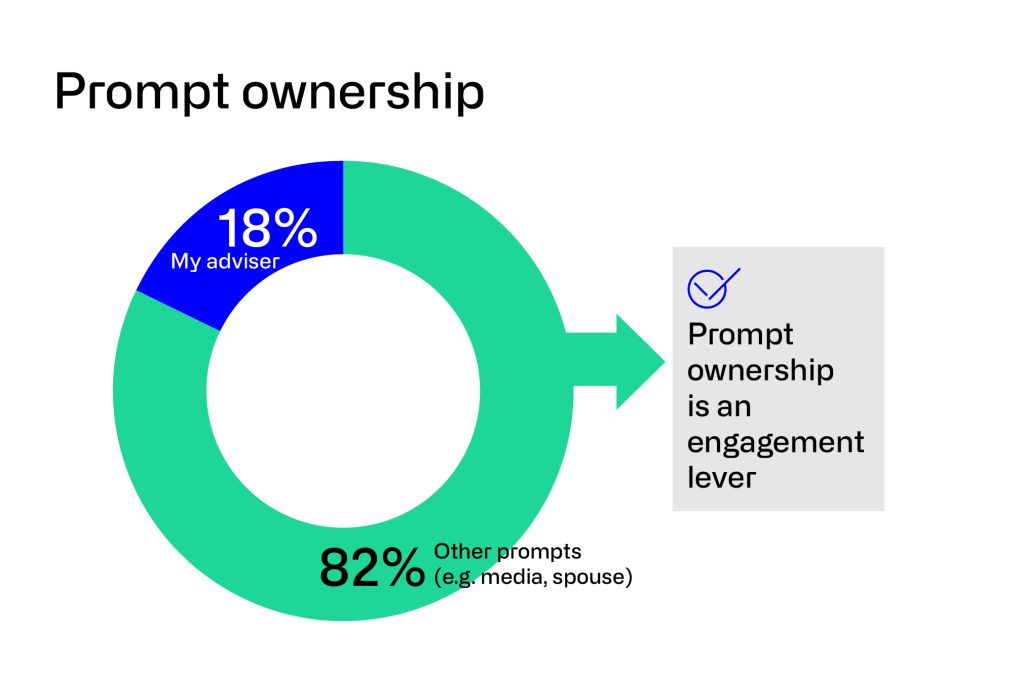
Q: “Who prompted you to take tax year end action last year?” (financial adviser vs accountant vs self vs partner/family vs media/news vs provider/platform etc.)
*Based on research commissioned by Wealthtime and conducted by Ad Lucem.
The survey, conducted in January 2026 among 1,000 UK adults aged 35+ with average investable assets of £350,000, provides critical insights into the behaviours, concerns and preferences of people navigating tax year-end planning.
Please be aware that Wealthtime is not responsible for the information displayed on, or the availability of, the Ad Lucem website.
Download the reportRead the next article
For more tax year end planning top tips, read the next bitesize article.
Read nextBrowse all bitesize articles
For more expert insight and analysis, visit our tax year end library.
Visit the libraryStay connected
This article is intended for regulated financial advisers and investment professionals only.
 linkedin
 twitter
 facebook
 mail
mail